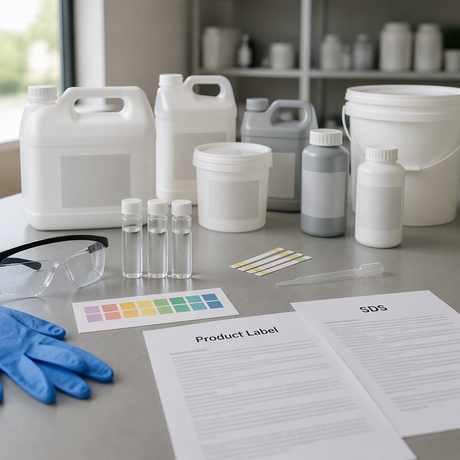
TCCA, also called trichlor, is a stabilized chlorine chemistry used in pool treatment; it releases free available chlorine in water and also contributes cyanuric acid, so buyers should treat “90% available chlorine” as product-strength wording, not as a pool dose.
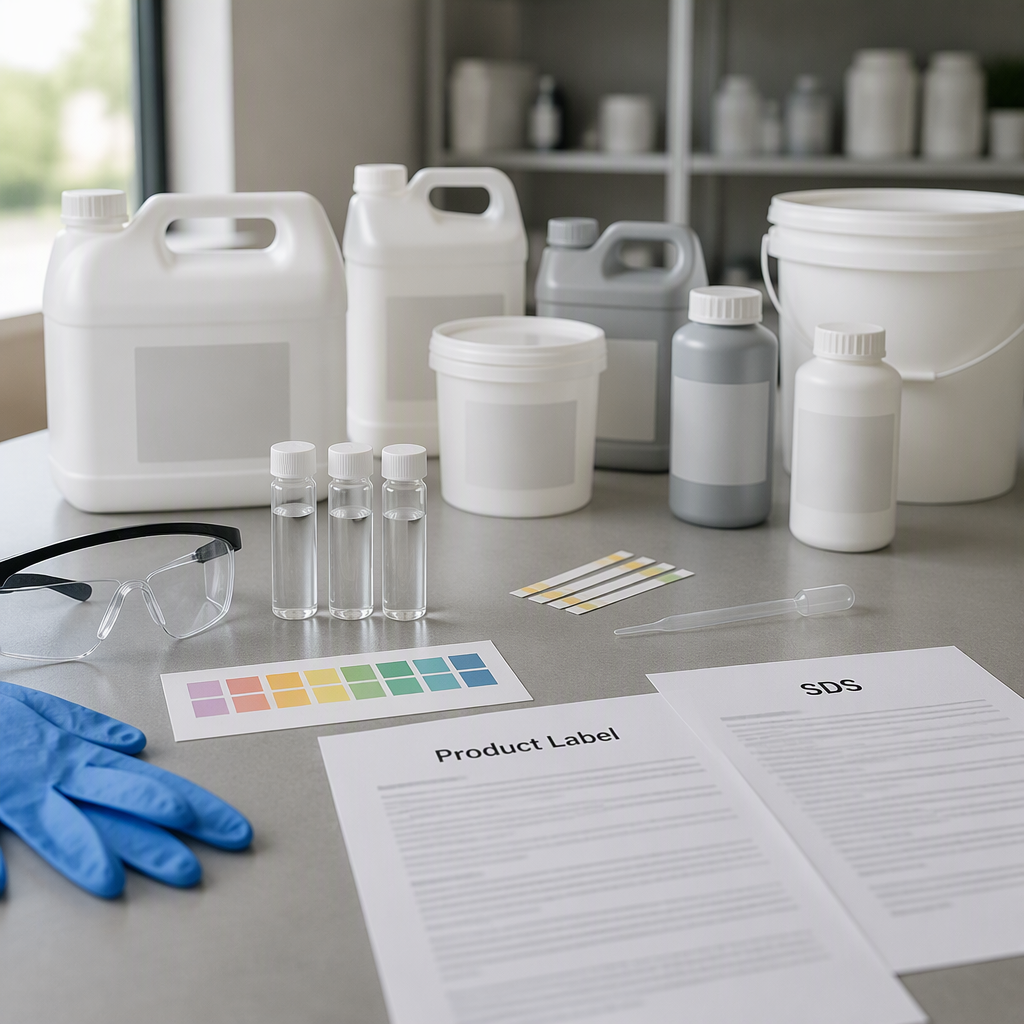
What is TCCA in pool treatment?
TCCA is trichloroisocyanuric acid, a chemical also identified as symclosene or trichlor; the NIST Chemistry WebBook lists it under CAS Registry Number 87-90-1 with formula C3Cl3N3O3 and molecular weight 232.409.
For distributor and operator document review, the identity check starts with the chemical name, common names, CAS number and formula matching across the label, SDS and quotation.
In pool-language, buyers often see TCCA described as trichlor, a stabilized chlorine sanitizer used in pool and spa treatment.
How TCCA works as a stabilized chlorine source
When trichlor dissolves in water, it forms hypochlorous acid and hypochlorite, the free available chlorine species associated with pool sanitizing performance.
- Confirm the product is intended for pool or spa sanitizer use by reading the current product label before application.
- Treat free available chlorine as the operating result to be managed in water, not as a promise that one generic dose fits every pool.
- Account for water chemistry conditions because the balance between hypochlorous acid and hypochlorite is affected by pH.
General trichlor chemistry explains why the product can be useful in pool treatment, but it does not replace the label directions for a specific registered product.
How TCCA contributes cyanuric acid
TCCA adds cyanuric acid as it adds available chlorine; the ICC/PHTA article states that trichlor use adds 0.6 ppm cyanuric acid for each 1 ppm of available chlorine added.
The ICC Building Safety Journal article authored by the PHTA Recreational Water Quality Committee supports this general CYA contribution relationship for trichlor use.
For operators, the practical point is cumulative: stabilized chlorine can help maintain chlorine in outdoor pool contexts, but continued trichlor use also changes the cyanuric acid level that must be monitored under the applicable operating program.
90% available chlorine is not the same as the pool dose
“90% available chlorine” describes common trichlor tablet label wording about available chlorine content; it is not an instruction to dose 90% of anything into a pool.

| Buyer question | What it means | What it does not prove |
|---|---|---|
| Is the chemical TCCA? | Check the identity fields such as trichloroisocyanuric acid, symclosene, CAS 87-90-1 and formula C3Cl3N3O3. | Identity data does not prove pool dose, registration, purity grade, or supplier capability. |
| Does the product say 90% available chlorine? | This is product-strength wording commonly indicated for trichlor tablets. | It is not a site-specific application rate. |
| How should it be used? | The current pesticide label is the use-direction document that helps manage potential risk. | A generic article cannot replace the product label, local requirements, measured water chemistry or operator judgment. |
EPA label guidance tells users to always read the pesticide label, so a buyer should reject quotations that convert a percentage claim into an unsupported universal dose.
What to check before evaluating or buying TCCA
Before evaluating a TCCA product, ask for the current product label and use the label to verify directions, restrictions and risk-management information.
- Match the chemical identity: trichloroisocyanuric acid, trichlor or symclosene; CAS 87-90-1; and formula C3Cl3N3O3.
- Check whether the product wording refers to available chlorine content and whether the label states how the product is applied.
- Ask for the SDS so handling, storage and incompatibility information can be reviewed before procurement or distribution.
- Use the EPA pesticide-labels guidance as a reminder that label directions are central to pesticide risk management.
| If the document says… | Buyer response |
|---|---|
| The name or CAS number differs from TCCA identity fields | Pause the evaluation and request clarification before comparing price or volume. |
| Only “90%” is shown without label use directions | Ask for the current full label; do not infer a pool dose from the percentage. |
| Use directions are missing or outdated | Request the current label before distribution, storage planning or operator handoff. |
Scope boundaries for labels, SDS and product claims
Public guidance can explain why labels matter, but it cannot prove the dose, certification, registration status or compliance of an AQUA CHEM-branded or any other supplier-specific TCCA product.
General trichlor information supports concepts such as available chlorine, cyanuric acid contribution and common pool-use context; it does not verify a named supplier’s grade, purity, audit result, production capacity, delivery time or customer outcome.
- Use the current product label for use directions and risk-management information.
- Use the SDS and supplier documents to review handling and storage before buying or distributing.
- Use chemical identity fields to avoid confusing TCCA with a different chlorine chemistry.
Identity checks across label, SDS and quotation
The key identity fields to compare are the chemical name trichloroisocyanuric acid, synonym symclosene, CAS Registry Number 87-90-1, formula C3Cl3N3O3 and molecular weight 232.409.
- Confirm the quotation and SDS refer to the same chemical identity rather than only to a trade name.
- Check that CAS 87-90-1 appears consistently where the document identifies TCCA.
- Use formula and molecular weight as cross-checks when technical documents are being compared by procurement or quality teams.
Common TCCA forms and use context
Trichlor is commonly discussed for pool treatment in tablet, stick and granular forms, but those general forms do not prove any supplier’s product availability.
| Form discussed in pool use | Evaluation point | Boundary |
|---|---|---|
| Tablet | Often associated with controlled feed or floater-style pool use depending on the label. | Do not assume compatibility with a feeder or skimmer unless the label permits it. |
| Stick | Another solid trichlor form discussed in pool contexts. | Ask the supplier which forms are actually offered and documented. |
| Granular | A form discussed for trichlor use, subject to label directions. | Do not substitute it into an application written for a different product form. |
Handling and storage questions to raise before use
Before handling TCCA, review the label and SDS for application limits, storage conditions, incompatibilities and emergency guidance.
Because pesticide labels help manage potential risk, distributors and operators should keep the current label available wherever product selection, storage planning or operator training occurs.
- Ask whether the SDS identifies oxidizer-related handling and incompatibility precautions.
- Verify that the label is current before using, repacking, relabeling or distributing product.
- Confirm that the intended pool equipment or feeder arrangement is permitted by the product label before use.
- Do not mix chlorine products or improvise storage conditions; use the product documents for compatibility guidance.
Conclusion
TCCA is best evaluated as stabilized trichlor chemistry: useful for adding free available chlorine, important for its cyanuric acid contribution and unsuitable for generic dosing shortcuts.
For a responsible purchase or operation decision, match the chemical identity, understand the available-chlorine wording, and ask for the current label and SDS before treating any supplier statement as application guidance.
Frequently asked questions about TCCA in pool treatment
These answers address the main evaluation questions distributors, pool operators and service companies should resolve before treating TCCA as a suitable pool-treatment option.
Is TCCA the same as trichlor?
Yes. TCCA is trichloroisocyanuric acid, and trichlor or symclosene are names buyers may see for the same chemical identity.
Does TCCA add cyanuric acid?
Yes. Trichlor use adds cyanuric acid along with available chlorine, including the 0.6 ppm CYA per 1 ppm available chlorine relationship described by the ICC/PHTA article.
What does 90% available chlorine mean?
It is product-strength wording commonly associated with trichlor tablets, not a pool-volume dose or a universal application rate.
Can I use a generic TCCA dose from a web article?
No. Use the current product label and measured water conditions rather than converting a general chemical explanation into a site-specific dose.
What documents should a distributor request?
Request the current label, SDS and quotation details that identify the product form and available-chlorine wording.
What identifiers should match across documents?
The chemical name, synonym set, CAS 87-90-1, formula C3Cl3N3O3 and molecular weight 232.409 should be consistent where the documents identify TCCA.
Does public guidance prove a supplier’s certification or registration?
No. Public label guidance explains why labels matter, but supplier-specific registration, certification, grade and commercial claims must come from current supplier documents.