Please Choose Your Language

Views: 0 Author: Site Editor Publish Time: 2026-01-22 Origin: Site


You want safe, clear water every time you swim. Swimming pool chemicals help you keep your pool clean and healthy. These products kill germs and control algae. Swimming pool chemicals protect you from harmful bacteria that can make you sick. They also keep your pool water balanced, so your eyes and skin feel comfortable. Using swimming pool chemicals stops problems before they start. You can trust Aquachem for high-quality swimming pool chemicals that make caring for your pool easy.
Swimming pool chemicals help keep water safe and clear. They kill germs and stop algae from growing.
Learn about the different pool chemicals and what they do. This helps you keep your pool healthy.
Test your pool water often to check chemical levels. This keeps swimming safe for everyone.
Chlorine is the most used sanitizer in pools. Use it the right way to stop health problems and cloudy water.
Change pH and alkalinity to stop skin irritation and equipment damage. Try to keep pH between 7.2 and 7.8.
Stop algae by keeping chemical levels right and cleaning often.
Use Aquachem products for easy and good pool care. They make pool care simple and keep water clear.
Always follow safety rules when using pool chemicals. This keeps you and your family safe.
It is important to know what each pool chemical does. Each one has its own job. Some chemicals kill germs. Others help balance the water. Some keep the water clear. Aquachem has many pool chemicals. These help you keep your pool safe and shiny.
Here is a table that lists the main types of pool chemicals, what they do, and some examples:
Category | Function | Examples |
|---|---|---|
Sanitizers | Disinfect water and destroy germs and bacteria. | Trichloroisocyanuric Acid (TCCA), Sodium Dichloroisocyanurate (SDIC), Calcium Hypochlorite, BCDMH |
Oxidizers | Break down organic waste and boost sanitizer power. | Calcium Hypochlorite, Non-Chlorine Shock |
Balancers | Keep pH, alkalinity, and calcium hardness in the right range. | pH Up & Down, Alkalinity Increaser, Calcium Hardness Increaser, Cyanuric Acid |
Algaecides | Prevent and control algae growth. | Quaternary Ammonium Compounds, Polymeric Algaecides |
Clarifiers & Flocculants | Clear cloudy water by grouping tiny particles for easy removal. | Pool Clarifier, Flocculant |
Stain & Scale Removers | Remove and prevent stains and scale from metals and minerals. | Scale Inhibitor, Liquid Scale Remover |
Specialty Treatments | Solve special problems like high phosphates or organic load. | Phosphate Remover, Enzyme Cleaner |
Tip: Always use the right pool chemicals for your pool. This helps stop problems and keeps your water safe.
You need to keep your pool water balanced. Balanced water keeps swimmers and pool parts safe. It also helps pool chemicals work better. Here are the best levels for the most important pool chemicals:
Chemical | Ideal Levels |
|---|---|
Salt | 2700 to 3400 ppm |
Free Chlorine | 1.0 to 3.0 ppm |
pH | 7.2 to 7.8 |
Cyanuric Acid (Stabilizer) | 60 to 80 ppm (80 ppm best) |
Total Alkalinity | 80 to 120 ppm |
Calcium Hardness | 100 to 400 ppm |
Metals | 0 ppm |
Saturation Index | -2 to 0.2 (0 best) |
You should test your pool water every week. If you have a public pool, test it more often. Keeping your pH between 7.2 and 7.8 helps your sanitizer work well. If your pool chemicals stay in the right range, your water will be clear and safe.
Note: If you see cloudy water, stains, or algae, check your chemical levels right away. Fixing problems fast can stop bigger issues.
Chlorine is the most used way to keep pool water safe. It kills germs, bacteria, and algae. Most pools use chlorine because it works well. It is also easy to add. Chlorine-based sanitizers make up more than half of all swimming pool chemicals. Chlorine comes as tablets, granules, and liquids. Each type has a special use.
Chlorine tablets melt slowly and give steady chlorine. You put them in a floating dispenser or skimmer basket.
Granules melt fast and are good for quick fixes.
Liquid chlorine works quickly and is simple to pour in.
You use chlorine for superchlorination too. This means you add a lot of chlorine to kill extra germs and waste. Superchlorination helps when many people swim or after heavy rain. People also call this shocking or superchlorinating the pool.
Other sanitizers like bromine or non-chlorine shocks are becoming more popular. Still, chlorine is the top pick for most pool owners. It is strong and dependable.
Tip: Always read the label before you add chlorine. Pick the right type for your pool and follow the directions.
You want chlorine that works well and lasts long. Aquachem gives you many choices for pool cleaning. Each product has its own benefits:
Sodium Dichloroisocyanurate (SDIC) has 55% to 60% chlorine. It melts fast and does not change pH much. Use it for daily cleaning or quick fixes.
Trichloroisocyanuric Acid (TCCA) has up to 90% chlorine. It melts slowly and lowers pH. It gives steady chlorine for long protection.
Calcium Hypochlorite (CHC) has 65% to 70% chlorine. It is not stabilized, so use it for superchlorination or shock. You need to melt it before adding to the pool.
Bromochlorodimethylhydantoin (BCDMH) gives both bromine and chlorine. It works well in high pH water and lasts long.
Aquachem makes these products to give you clear, balanced water. You get good quality and value every time. Aquachem chlorine tablets are simple to use. They help you keep your pool safe with less work.
Product Name | Chlorine Content | Main Use | Special Feature |
|---|---|---|---|
SDIC | 55%-60% | Daily sanitation | Fast dissolving, stable chlorine |
TCCA | Up to 90% | Long-term sanitation | Slow release, lowers pH |
CHC | 65%-70% | Superchlorination | Shock treatment, non-stabilized |
BCDMH | Mild, long-lasting | High pH environments | Bromine and chlorine combined |
You can trust Aquachem for chlorine that saves money and lasts. Their products help you keep your pool clean and healthy all season.
You need to keep the right amount of chlorine in your pool. This keeps water safe and clear. The best chlorine range is 1.0 to 3.0 parts per million (ppm). If you keep chlorine in this range, you protect swimmers from germs. You also keep the water fresh.
Health Benefit | Description |
|---|---|
Prevention of Recreational Water Illnesses (RWIs) | Good chlorine levels help stop sickness from dirty water. |
Reduction of Chloramine Complaints | Keeping chlorine right lowers bad smells and skin problems. |
Overall Protection of Public Health | Good chlorine care keeps swimming safe for everyone. |
Test your pool water at least once a week. If your pool is busy, test it more often. Here is how you test and fix chlorine:
Test the water with a pool kit or strips. Make sure chlorine is between 1 and 3 ppm.
If chlorine is low, add tablets, granules, or liquid chlorine. Tablets also add stabilizer to help chlorine last longer.
If chlorine is high, stop adding chlorine. Let the level drop or use a chlorine reducer like sodium thiosulfate.
Do superchlorination every week or two. This keeps water clean and removes extra waste.
Check sanitizer levels after heavy use, storms, or hot weather. Keeping chlorine in the right range helps you avoid cloudy water, bad smells, or itchy skin.
Note: Superchlorination is important for every pool. It helps you get rid of things regular chlorine cannot handle.
You can keep your pool safe and fun by watching chlorine and sanitizer levels. Aquachem gives you the tools and products you need for easy pool care.
You need to know the signs when chlorine is not balanced in your pool. Chlorine keeps your water safe, but too much or too little can cause problems. Watch for these common signs:
You may notice coughing, wheezing, or a burning feeling in your throat and chest. These are signs of respiratory distress.
Your eyes might turn red, feel itchy, or water more than usual. Skin can become red and irritated.
Some people get headaches after swimming in water with the wrong chlorine level.
You might feel tired or weak after spending time in the pool.
If you see these signs, test your pool water right away. Chlorine imbalance can make swimming uncomfortable and even unsafe. Keeping chlorine at the right level helps you avoid these health problems.
If you smell a strong chlorine odor, it often means the water has too many contaminants, not too much chlorine. Test your pool to find out what is wrong.
You want your pool to stay clean and safe. Adjusting chlorine is easy when you follow best practices. Start by testing chlorine levels two or three times each week. Use a test kit or test strips for quick results.
If chlorine is low, add the right amount using tablets, granules, or liquid. Each form works well, so choose what fits your pool. Tablets dissolve slowly and keep chlorine steady. Granules and liquid work fast for quick fixes.
Shock your pool every week or after heavy use. Shocking means adding extra chlorine to remove waste and kill germs. This step keeps your water clear and fresh.
Here are some tips for adjusting chlorine:
Test chlorine often, especially after storms or lots of swimmers.
Add chlorine when levels drop below 1.0 ppm.
Use superchlorination to handle tough problems like cloudy water or strong odors.
Always follow the instructions on your chlorine product.
Chlorine disinfects your pool and kills harmful microorganisms. It stops algae from growing and keeps water clear. When you keep chlorine balanced, you make swimming safe and pleasant for everyone.
Regular testing and careful adjustment help you enjoy your pool without worry. Aquachem offers reliable chlorine products to make this job simple.
You need to keep your pool water in balance for safety and comfort. The pH level shows if your pool water is acidic or basic. If the pH is too high or too low, you may see problems like cloudy water, itchy skin, or damage to pool equipment. High pH can cause scaling and make chlorine less effective. Low pH can lead to corrosion and burning eyes.
Alkalinity acts as a buffer for pH. It helps keep the pH steady. If alkalinity is too low, your pool water can change pH quickly. If it is too high, it becomes hard to adjust the pH. You should test both pH and alkalinity often to keep your pool healthy.
If you notice cloudy water, scaling, or skin irritation, check your pH and alkalinity right away.
Aquachem gives you easy ways to fix pH and alkalinity problems. You can use Aquachem’s 6-Way Test Strips or Smart Strips to check your pool water. If the pH is high, add Aquachem pH Down to bring it back to the right range. If the pH is low, use Aquachem pH Up. These products help you reach the proper chemical values for safe swimming.
To keep pH steady, you must also watch alkalinity. Aquachem offers alkalinity increasers to help you reach the best range. For most pools, you want alkalinity between 80 and 120 ppm. Some pool types, like vinyl or fiberglass, may need a higher range. Here is a chart that shows the recommended alkalinity for different pool types:
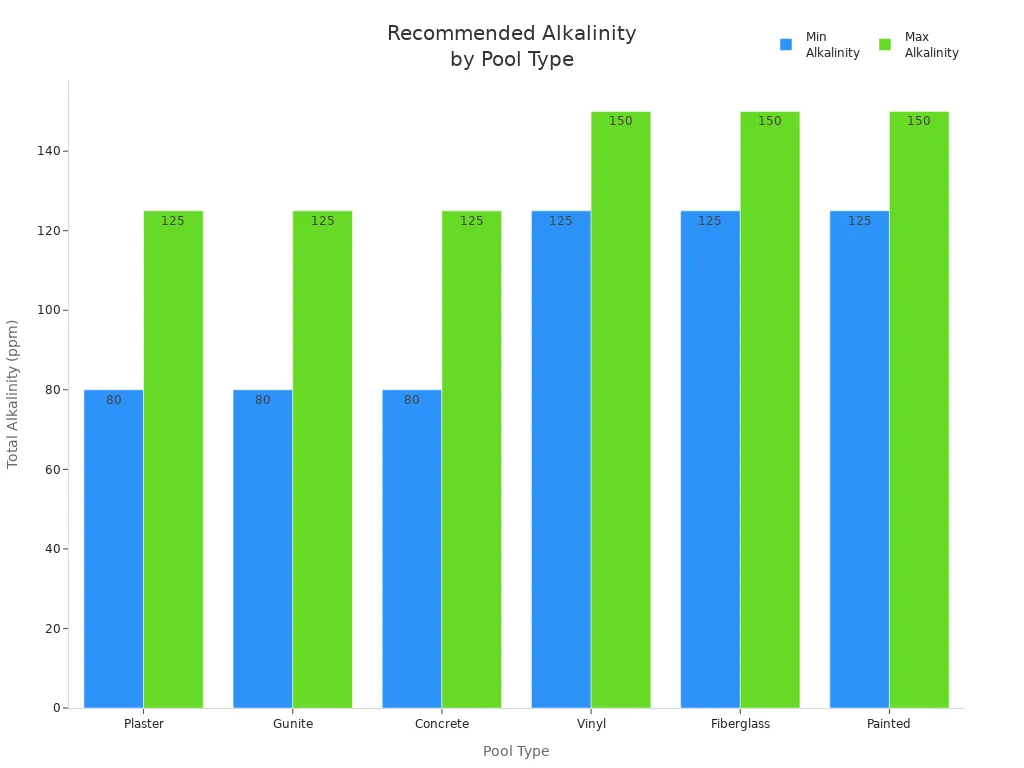
Test your pool water every week. Adjust pH and alkalinity as soon as you see a problem.
You should keep your pool pH and alkalinity in the right range for the best results. Most experts suggest a pH of 7.4 to 7.6. California rules say 7.2 to 7.8 is safe for public pools. National health guidelines allow 7.0 to 7.8. Here is a table to help you remember:
Source | Recommended pH Range |
|---|---|
Traditional teachings | 7.4 to 7.6 |
California public/commercial | 7.2 to 7.8 |
National public health | 7.0 to 7.8 |
For alkalinity, aim for 80 to 120 ppm. Do not let it drop below 60 ppm or rise above 180 ppm. Keeping alkalinity in this range helps your pH stay steady. It also protects your pool from damage and keeps swimmers comfortable.
Minimum alkalinity: 60 ppm
Ideal alkalinity: 80–120 ppm
Maximum alkalinity: 180 ppm
If you keep your pool pH and alkalinity in the right range, you will have clear water, safe swimming, and less trouble with equipment. Always use Aquachem products to help you reach and keep these levels.
You can spot signs of water imbalance in your pool if you know what to look for. When the pH is not right, you may see cloudy water or feel burning eyes after swimming. If your skin feels dry or itchy, your pool water may be too acidic or too basic. Stains on the pool walls or floor can also mean the water is not balanced. You might notice white, chalky buildup on ladders or tiles. This is called scale, and it forms when the pH is too high.
Sometimes, your pool water turns green or you see algae growing. This happens when the water balance is off and chlorine cannot work well. If you smell a strong chemical odor, it does not always mean there is too much chlorine. It can mean the water is not balanced and needs attention.
If you see any of these signs, test your pool water right away. Fixing problems early keeps your pool safe and clear.
You can keep your pool healthy by adjusting pH and alkalinity when needed. Start by testing the total alkalinity. If it is too low, add an alkalinity increaser. Wait two hours, then check the pH level. If the pH is below 7.2, use a pH up product to raise it. If the pH is above 7.8, use a pH down product to lower it. After making changes, wait one hour before testing the water again.
Check the calcium hardness in your pool. If it is low, add a calcium hardness increaser. Keeping all these levels in the right range helps your pool stay clear and safe for swimming.
Here are some tips for keeping your pool balanced:
Test your pool water every week.
Make small changes instead of big ones.
Add chemicals with the pump running for even mixing.
Wait between steps to let the water adjust.
Record your test results to spot patterns.
If you have trouble with high pH that will not go down, you may need to use special products or methods. Aquachem offers solutions for persistent high pH, such as acid feeders or stabilizers. These help you keep your pool water in balance with less effort.
Regular care and testing make pool maintenance easy. Balanced water protects your pool and keeps swimmers comfortable.
You need to watch your pool’s calcium hardness. This means how much calcium is in your pool water. If the calcium is too low, your water becomes aggressive. It will try to pull minerals from your pool walls and metal parts. This can cause damage and make your pool rough or stained. If the calcium is too high, you will see white, chalky spots called scale. Scale can clog your pipes and filters. It also makes your pool look dirty.
Here is why calcium hardness matters:
Low calcium hardness can cause corrosion and damage to pool surfaces and equipment.
High calcium hardness can lead to scale buildup. This can block water flow and make sanitizers less effective.
Keeping calcium hardness between 200 and 400 parts per million (ppm) helps prevent both corrosion and scaling.
Regular testing protects your pool and keeps the water safe for swimming.
Proper calcium levels help your pool last longer and work better.
Test your pool water every week. This helps you catch problems before they get worse.
You can trust Aquachem to help you manage calcium hardness. Aquachem offers products that prevent and remove scale. These products also protect your pool from metal stains.
Product Name | Features |
|---|---|
Eliminates hard water problems, removes iron and copper, prevents metal stains and scale, treats hard water, removes fresh metal stains |
You can use Aquachem’s Scale, Metal & Stain Control to stop scale before it starts. This product works well in pools with hard water. It also helps remove iron and copper that can stain your pool. You get clear water and smooth pool surfaces.
Always follow the instructions on the label for best results.
You can stop scale from forming by keeping your pool water balanced. Test your calcium hardness every week. If the level is too high, use Aquachem’s Scale, Metal & Stain Control. This product keeps calcium from sticking to your pool walls and pipes.
If you already see scale, you can remove it. Lower the water level to expose the scale. Apply the scale remover directly to the spots. Let it sit for the time on the label, then brush and rinse the area. Run your pump to filter out loose particles.
Here are some tips for preventing scale:
Keep calcium hardness between 200 and 400 ppm.
Test your water often.
Use scale control products if your water is hard.
Brush your pool walls and floor every week.
Clean your filter often.
Regular care keeps your pool looking great and helps your equipment last longer. Aquachem gives you the tools you need for easy pool maintenance.
You need to keep the right amount of calcium in your pool water. This helps protect your pool and makes swimming safe. Calcium hardness means the amount of dissolved calcium in your water. If you keep calcium in the right range, you stop problems before they start.
The best calcium hardness level depends on your pool type. You can use this table to find the right range for your pool or spa:
Pool Type | Recommended Calcium Hardness (ppm) |
|---|---|
Swimming Pool | 200–400 |
Spa | 150–250 |
If you have a regular swimming pool, aim for 200 to 400 parts per million (ppm). If you have a spa, keep calcium between 150 and 250 ppm. These numbers help you avoid damage and keep your water clear.
You should test your calcium hardness every month. If you live in a place with hard water, test more often. Use a pool test kit or test strips. Write down your results so you can see changes over time.
If your calcium is too low, your water will try to get minerals from your pool walls and metal parts. This can cause rough surfaces, stains, or even leaks. If your calcium is too high, you will see white, chalky spots called scale. Scale can block your pipes and make your pool look dirty.
Here are some signs that your calcium level is not right:
Rough or pitted pool surfaces
Cloudy water that does not clear up
White spots or buildup on tiles and ladders
Stains on pool walls or floor
You can fix low calcium by adding a calcium hardness increaser. If your calcium is too high, you may need to drain some water and add fresh water. You can also use a scale control product to help stop buildup.
Tip: Always adjust your calcium hardness before you change your pH or alkalinity. This helps you balance your water faster and easier.
Keeping your calcium in the right range helps your pool last longer. You will have fewer problems with stains, scale, or cloudy water. Your pool will look better, and you will enjoy swimming more. Regular testing and small changes make pool care simple.
You want to stop algae before it grows in your pool. Algae can turn pool water green, cloudy, or even black. It also makes pool surfaces slippery and unsafe. You can keep algae away by doing a few easy things:
Test and balance your pool water every week.
Keep sanitizer and alkalinity at the right levels.
Run your pool pump 8 to 12 hours each day.
Brush the walls and vacuum the floor to remove dirt.
Shock your pool with extra chlorine every two weeks or after lots of swimming.
Use algaecides and phosphate removers for more protection.
Algae blooms happen when chemicals are not balanced, water does not move, or it is warm outside. If you keep your pool clean and balanced, algae will not grow easily.
Regular cleaning and care help you avoid big algae problems.
If you see algae in your pool, act fast. Aquachem has strong products to fight algae blooms. You can use Aquachem Shock Xtra Blue to raise free chlorine quickly. This product works in about 20 minutes. It clears light algae and cloudy water. If you have tough algae, you may need a stronger shock or special treatment.
Here is a table that compares Aquachem Shock Xtra Blue with other pool shocks:
Product | Free Chlorine Level (ppm) | Time to Raise Level | Effectiveness Against Algae |
|---|---|---|---|
Aquachem Shock Xtra Blue | 2-4 | 20 minutes | Light algae growth, cloudy water |
HTH Super Shock | 3-5 | 10 minutes | Black and mustard algae |
DryTec Pool Shock | 3-5 | 15 minutes | Most algae problems |
Clorox Pool&Spa Shock | 2-4 | 30 minutes | Green algae blooms, cloudy water |
You should always shock your pool first to kill most algae. After shocking, use an algaecide to get rid of any leftover spores. Keep adding the right chemicals to stop algae from coming back. Aquachem products help you get clear water fast and keep it that way.
Sometimes, your pool water looks cloudy even after using chemicals. Tiny bits and dead algae can stay in the water. You can use clarifiers and flocculants to fix this problem. Clarifiers use special polymers to stick small pieces together. This helps your filter catch them. You can pick standard clarifiers for weekly care, concentrated ones for quick results, or enzyme-based clarifiers for natural cleaning.
Flocculants work in a different way. They pull dirt and algae to the bottom of the pool. You can then vacuum the waste out. Flocculants are best for very cloudy pools or after a big algae bloom.
Here are some common clarifiers and flocculants:
Standard clarifiers for regular care
Concentrated clarifiers for fast results
Enzyme-based clarifiers for breaking down oils and organic stuff
Flocculants for heavy cleaning
Use clarifiers and flocculants to keep your water clear and your pool looking nice.
You can trust Aquachem to give you the right products for every step. Using these treatments often keeps your pool water clear, makes cleaning easier, and helps your equipment last longer.
You want your pool water to look sparkling and inviting every day. Clear water is not just about beauty. It also means your pool is healthy and safe for swimming. When you keep your water clear, sunlight can reach deeper into the pool. This helps good plants and tiny organisms grow, which keeps your pool’s ecosystem balanced.
You can follow some simple steps to keep your pool water clear all season:
Test your pool water every two weeks. This helps you catch problems early.
Clean your pool filter every month. A clean filter removes dirt and tiny particles that make water cloudy.
Keep your pH and chlorine at the right levels. Balanced water stops germs and algae from growing.
Use algaecides as part of your regular care. These products prevent algae before it starts.
Run your pool pump every day for 8 to 12 hours. Good circulation keeps water moving and helps your filter work better.
Brush the pool walls and vacuum the floor each week. This removes dirt and stops algae from sticking.
Shock your pool with extra chlorine after heavy use or storms. Shocking kills germs and clears up cloudy water.
You can also use technology to help you remember these tasks. Many pool owners use mobile apps or service software to track chemical use and set reminders for cleaning. This makes pool care easier and helps you stay on schedule.
If you want extra help, you can hire a professional pool service. Experts can test your water, clean your pool, and adjust chemicals. This gives you peace of mind and saves you time.
Here is a quick checklist for keeping your pool water clear:
Task | How Often |
|---|---|
Test water | Every 2 weeks |
Clean filter | Every month |
Brush and vacuum | Every week |
Shock pool | After heavy use |
Add algaecide | As needed |
Tip: Write down your test results and cleaning dates. This helps you spot patterns and fix problems before they get worse.
When you follow these steps, you keep your pool water clear and safe. You also protect your pool equipment and make swimming more fun for everyone. Aquachem offers the products and support you need for easy, effective pool care.
Image Source: pexels
You need to test your pool’s chemical levels often to keep the water safe. Regular testing helps you catch problems before they become serious. If you own a busy pool, you should check chlorine and pH at least two to four times each day. Heavy use can lower chlorine quickly, so more frequent testing is important during peak times. Local rules may require you to log your readings every few hours. Following these steps helps you prevent waterborne illnesses like Cryptosporidium and giardia. These germs can grow in pools that do not have the right chemical levels.
Test chlorine and pH two to four times daily.
Check more often when many people use the pool.
Record your results to spot changes.
Follow local health guidelines for testing.
Regular testing keeps your pool safe and helps you avoid costly problems.
You can use Aquachem’s test kits to check your pool water quickly and easily. These kits give you fast results for chlorine, pH, alkalinity, and more. You get clear instructions with every kit, so you know what to do. If you have questions, Aquachem’s support team is ready to help. You can reach out for advice on testing, adjusting chemical levels, or solving pool problems. Aquachem also offers after-sales service to make sure you get the best results from your products.
Use test strips or liquid kits for accurate readings.
Contact Aquachem for expert help if you need it.
Get support for both routine care and special issues.
Good support makes pool care easier and gives you peace of mind.
You must handle and store pool chemicals with care. Safe storage protects you, your family, and your property. Always keep chemicals in a cool, dry place below 95°F (35°C). Store them away from sunlight and moisture. Make sure you keep different chemicals apart to prevent dangerous reactions. Only trained people should handle pool chemicals. Keep the storage area locked and well ventilated. Never eat or drink near chemicals. Always check containers for leaks and never reuse empty ones.
Store chemicals according to local building and fire codes.
Keep chemicals off the floor and away from water.
Post safety instructions in the storage area.
Make sure only authorized people have access.
Safe handling and storage prevent accidents and keep your pool running smoothly.
Aquachem provides guidance and resources to help you follow safety rules. You can trust their team to answer your questions and support you with every step of pool care.
You need to keep all your pool chemicals in balance for a healthy pool. Each chemical has a job, but they work best when you use them together. Chlorine kills germs. pH adjusters keep the water comfortable. Algaecides stop algae from growing. When you balance these elements, you prevent common pool problems like cloudy water, algae blooms, and strong odors.
If you add too much of one chemical, you can cause new issues. For example, high chlorine can irritate your skin and eyes. Low pH can damage pool parts. High calcium can leave white spots. You should test your water often and make small changes. This helps you avoid common pool problems and keeps your pool safe.
Keeping your pool balanced means you use less chemicals and spend less time fixing problems.
Pool chemicals do not work alone. They react with each other and with things swimmers bring into the water. When you add chlorine or bromine, these disinfectants kill germs. They also react with sweat, urine, and lotions. This reaction forms disinfection by-products, or DBPs. These by-products can affect water quality and sometimes cause health risks.
Every swimmer adds organic matter to the pool. Even a small amount of urine or sweat can change the water. Studies show that each swimmer adds about 30 to 80 mL of urine. This increases the chance of DBPs forming. If you do not manage these reactions, you may see common pool problems like strong smells, eye irritation, or cloudy water.
You can prevent these issues by following a few steps:
Shower before swimming to reduce organic matter.
Test and adjust chlorine and pH levels often.
Shock your pool regularly to remove waste.
Run your filter every day to keep water moving.
If you notice common pool problems, act quickly. Test your water and adjust your chemicals. This keeps your pool clear and safe for everyone.
Remember, the way chemicals interact can help or hurt your pool. Good balance stops most common pool problems before they start.
You play a key role in keeping your pool safe and enjoyable. When you understand swimming pool chemicals, you protect your health and your investment. Aquachem gives you reliable products and expert support. Test your water often and use Aquachem chemicals as directed. You will see clear water and happy swimmers.
A well-maintained pool brings you peace of mind and more fun every season!
You should test your pool water at least once a week. If your pool gets heavy use or after storms, test more often. Regular testing helps you keep your water safe and clear.
First, test your water for pH, chlorine, and alkalinity. Adjust the chemicals as needed. Clean your filter and use a clarifier if needed. Cloudy water often means your pool needs better balance or cleaning.
You should wait until chemicals mix well. For most products, wait at least 15–30 minutes. After shocking your pool, wait until chlorine drops to safe levels (1–3 ppm). Always check the label for exact wait times.
A strong chlorine smell means there are chloramines in the water, not too much chlorine. Chloramines form when chlorine mixes with sweat or urine. Shock your pool to remove them and restore fresh water.
You can use tablets for steady chlorine or granules for quick fixes. Always add chlorine with the pump running. Spread granules evenly or use a floating dispenser for tablets. Follow the product instructions for best results.
Keep your water balanced and clean. Brush the walls and vacuum the floor each week. Run your pump daily. Use algaecide as part of your regular care. Test and adjust chemicals often to stop algae before it starts.
Stay calm. Wear gloves and clean up spills right away. Sweep up dry chemicals and rinse the area with lots of water. Never mix different chemicals. If you have a large spill, call for help.


